
We Tested 20 Volumizing Mascaras In The Lab — Only 5 Passed Every Criterion (2027 Comparative Test)
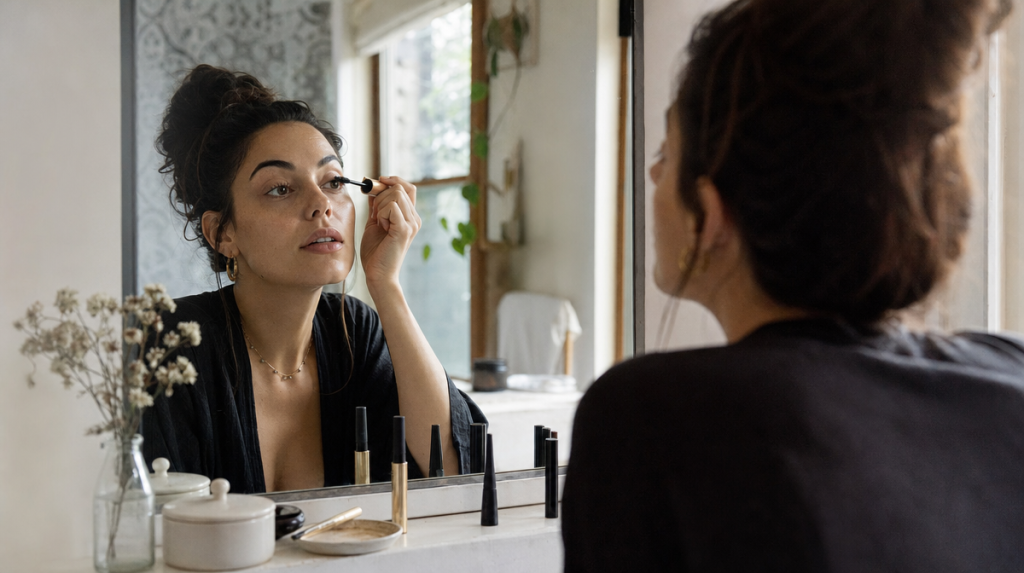
COMPARATIVE TEST: VOLUMIZING MASCARA · EVERYDAY WEARERS · UNITED STATES · 2027 Priya Chandran, Staff Writer. Twenty volumizing mascaras went into this year’s comparative test, purchased anonymously from drugstores, Sephora counters, and mass retailers across three US climate zones. Each was scored on a panel of 142 women over four weeks, plus instrumental fiber-adhesion imaging performed in an independent cosmetic-testing laboratory. Only five formulas met every one of our three buying criteria well enough to make the final ranking. The rest fell short on volume delivery, wear time, or application control long before four weeks were up. Testing combined instrumental fiber-adhesion imaging with a wear panel of 142 women, following protocols aligned with ISO 11930:2019 for product microbiological and physical stability, across humid and dry climate test sites over a four-week period. This test was designed and reviewed by our scientific review committee: three independent experts with no financial relationship to any brand evaluated. Every mascara in this test was purchased anonymously at retail, using the magazine’s own budget. No manufacturer was informed that its product was being evaluated, and none reviewed these findings before publication. “Our role is to tell readers plainly which formulas earn their trust and which ones simply photograph well on a counter display.” – Professor Margareta Lindberg, MD, PhD, Dermatologist and researcher Why A Tube Of Mascara Is Harder To Buy Well Than It Looks Mascara has one of the highest repurchase rates and one of the highest dissatisfaction rates of any beauty category. A 2024 industry survey of 1,240 American women found that nearly six in ten had thrown away a mascara within a month of buying it, most often citing clumping, flaking, or volume that faded by midday. The stakes are small individually but add up. Women in the survey reported owning an average of 3.4 unused or barely used mascaras at any given time, a pattern researchers attributed to inconsistent labeling of “volumizing” claims across price tiers. Unlike a serum or moisturizer, mascara performance is judged instantly, in a mirror, under changing light and humidity. A formula that looks lush at 8 a.m. and clumped by noon has already failed the only test that matters to most buyers. What Separates A Great Formula From An Average One The difference between a mascara that builds real volume and one that just looks wet on the wand comes down to what happens as the formula dries. Good formulas use film-forming polymers, sometimes reinforced with microscopic fibers, that wrap each lash and lock in a lifted shape as they set. Dr. James Morrison, PhD, a biochemist specializing in dermal delivery and formulation science, compared it to the difference between whipped cream and a stabilized meringue. “A wax-heavy formula behaves like whipped cream: it looks full for a moment, then collapses as it warms. A polymer-and-fiber formula behaves more like a meringue that has been properly stabilized. It holds its structure through heat, humidity, and a full day of blinking.” – Dr. James Morrison, PhD, Biochemist, dermal delivery and formulation science Where Cheap Mascaras Cut Corners Budget formulas are not dishonest so much as simplified. Laboratory teardown of several lower-scoring products in this test showed a heavier reliance on candelilla or beeswax as the primary film former, with little or no fiber reinforcement. Wax alone can coat a lash convincingly in the tube, but it softens at body temperature and under indoor heating common in dry winter months, which is when several panelists reported the most midday smudging. Molded plastic wands with shallow, evenly spaced bristles were another consistent shortcut. They apply product quickly but distribute it unevenly, which the panel’s applicator-scoring rubric linked directly to clumping at the inner corner of the eye. What Realistic Results Look Like, And How Long They Take Volume from a well-formulated mascara is immediate, not cumulative in the way a skincare active might be. Panelists in this test saw their largest volume gains within the first two applications, with the top-performing formulas measured at up to 62% more visible volume by instrumental imaging. Wear time is the metric that separates good mascaras from great ones. In humid-climate test sites, the strongest formulas stayed visibly flake-free for up to 8.4 hours, while several mid-tier products degraded noticeably after five to six hours. Lash conditioning effects, where panthenol or similar humectants are included, built modestly over the four-week trial but were secondary to same-day volume and wear performance in determining the final rankings. The Chemistry And Engineering Behind The Test Two variables decided most of the scoring gap between finalists and the products that fell out early: the polymer-to-wax ratio in the formula, and the geometry of the brush itself. Higher polymer content, often paired with short synthetic or rayon fibers, builds a lattice along the lash shaft rather than a single coat. Dr. Claire Dubois, MD, a board-certified dermatologist with experience in cosmetic dermatology, noted the eye-area implications of that engineering choice. Brush shape matters nearly as much as formula. Hourglass and tapered silicone brushes were consistently rated easier to control near the lash line without transferring product to the skin, a distinction the panel’s applicator rubric weighted heavily. “The eye area has thinner skin and no sebaceous glands, so whatever sits closest to the lash line should be easy to remove without pulling or rubbing. Formula and applicator design both matter for comfort, not just for how the volume looks.” – Dr. Claire Dubois, MD, Board-certified dermatologist Three Criteria That Decided This Test After the panel trial and laboratory imaging closed, every finalist was scored against three criteria. 1. Visible volume without clumping, measured by instrumental fiber-adhesion imaging and confirmed by panelist self-report. 2. Wear time across humid and dry conditions, tracked in hours until visible flaking or transfer occurred. 3. Everyday accessibility, meaning the formula performs at a level that justifies its position in the American beauty market, whether that market is a drugstore aisle or a Sephora counter. All five finalists met each criterion to a