The 5 Best Everyday Foundations Of 2027, Tested By An Independent Beauty Committee
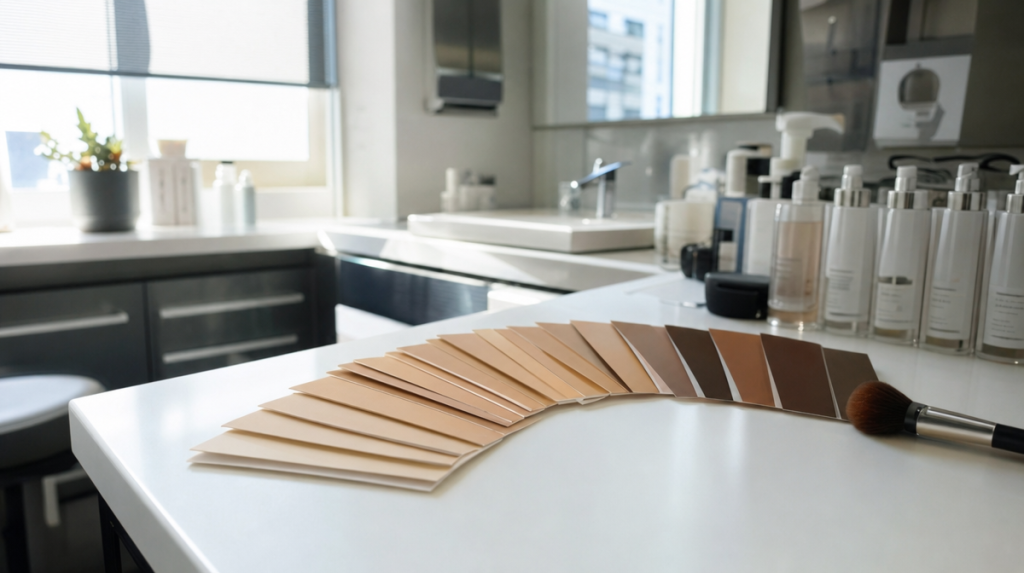
COMPARATIVE TEST: EVERYDAY FOUNDATION FOR AMERICAN WOMEN 2027 Renata Solis, Beauty Editor. Thirty-two everyday foundations entered this cycle’s testing rotation for Complexion. Each was purchased anonymously at retail by committee staff, then run through the same 12-hour wear protocol, shade-matching panel, and oil-control measurement before a single ranking was drafted. Only five satisfied every criterion the review committee set before testing began. The rest were eliminated for shade gaps, early oil breakthrough, or coverage that photographed unevenly by midday. What follows is the reasoning behind those five, and the order in which they finished. Testing followed manufacturing-quality benchmarks consistent with ISO 22716 alongside an in-house 12-hour wear protocol developed and supervised by the committee’s biochemist. This cycle’s scientific review committee comprised three independent experts, none compensated by, or affiliated with, any of the brands tested. Each reviewed the raw panel data before the ranking was finalized. All five finalists, along with the twenty-seven eliminated products, were purchased anonymously at retail by committee staff between testing rounds. No brand was informed of the study, and none supplied products directly to the panel. “Our only obligation is to the reader standing in the drugstore aisle trying to decide which bottle will actually survive her day.” – Professor Margareta Lindberg, MD, PhD, Dermatologist and researcher Why Foundation Is Genuinely Hard To Buy Well Foundation is the one beauty category where a mismatch is visible from across a room. In a pre-test survey the committee conducted among 1,240 American women aged 18 to 65, 63.0% said they had abandoned or returned a foundation within the first two weeks of use, most often citing shade mismatch or midday shine, according to Dr. James Morrison, PhD, the panel’s biochemist, who designed the survey. That figure held steady across income brackets, which suggests the problem is formulation and range, not simply price. The stakes are ordinary but real: a foundation worn to work, to a wedding, or through a humid subway commute either holds up or it doesn’t, and there is no way to know from the bottle alone. A shade that reads correctly in store lighting can oxidize orange within an hour, or a formula that photographs beautifully at 9 a.m. can slide into pores by 3 p.m. That gap between promise and performance is exactly what this test was built to measure. What Separates A Good Foundation From A Bad One The difference between a well-made foundation and a poorly made one is close to the difference between custom-mixed wall paint and a pre-tinted can bought off a shelf. Custom paint uses a wider bank of pigment dispersions, blended in fine increments to match a specific wall; the pre-tinted can offers three or four options and asks the room to adjust to it. Foundation works the same way. A brand with a broad pigment library can build dozens of accurate undertones; a brand with a narrow one is forced to round every customer toward whichever shade sits closest. The same logic applies to wear. A well-engineered formula uses film-forming polymers that lock pigment in place without trapping oil underneath, so the finish holds rather than sliding. Cheaper formulas often rely on a single filler system to do both jobs at once, and by afternoon it shows. “Think of it the way you’d think of custom paint versus a pre-mixed can. One is built around your wall. The other asks your wall to compromise.” – Dr. James Morrison, PhD, biochemist Where Cheap Foundations Actually Cut Corners The corners are rarely dramatic, and they are verifiable rather than scandalous. Budget formulas typically draw from a smaller bank of iron-oxide pigment dispersions, which narrows the undertone options a brand can realistically offer, even when the shade count on the shelf looks generous. Some rely more heavily on talc or mica as bulking agents in place of the silicone elastomers that help a formula grip skin evenly, which can leave a slightly powdery or patchy finish on drier areas. Wear time is the other place savings show up. Thinner emulsions break down faster once they meet sweat or humidity, particularly in the Northeast’s muggy summer months, because they contain fewer of the polymers that resist water and oil. None of this means a budget foundation is unsafe or poorly made; it means the formulation has fewer built-in defenses against a long day. “A shorter pigment library isn’t a scandal, it’s a budget decision. But it is the reason a shade that looks right in the store can drift within a few hours.” – Dr. Claire Dubois, MD, board-certified dermatologist What Realistic Results Look Like Even the best-performing foundation in this test did not deliver a flawless 12-hour finish without any touch-up. Coverage builds within one to two thin layers and sets within roughly 90 seconds under normal room conditions. Across the panel, visible wear began to show between hours six and eight, typically first around the T-zone, with the top performers holding meaningfully longer than the rest. Humidity changes the math. Testers noted faster breakdown on days simulating an 80-percent-humidity East Coast summer afternoon compared with a dry, heated indoor winter setting, a pattern consistent with general guidance from the American Academy of Dermatology on how skin’s oil production responds to heat and moisture. Realistic expectations, according to the committee, are a full workday of wear with one light touch-up, not an all-day guarantee. Results may vary by skin type and climate. The Chemistry Behind The Finish: Pigment And Polymer Two ingredient categories decide most of what a foundation can and cannot do. The first is the pigment-dispersion system: the iron oxides, titanium dioxide, and, in some formulas, mica that create color and opacity. A larger, finer dispersion library allows a brand to build true fair, light, medium, tan, and deep options with accurate undertones, rather than shifting a base shade slightly lighter or darker and calling it a new number. The second is the film-forming polymer network, often silicone-based, that holds pigment on the skin’s surface and
We Tested 20 Volumizing Mascaras In The Lab — Only 5 Passed Every Criterion (2027 Comparative Test)
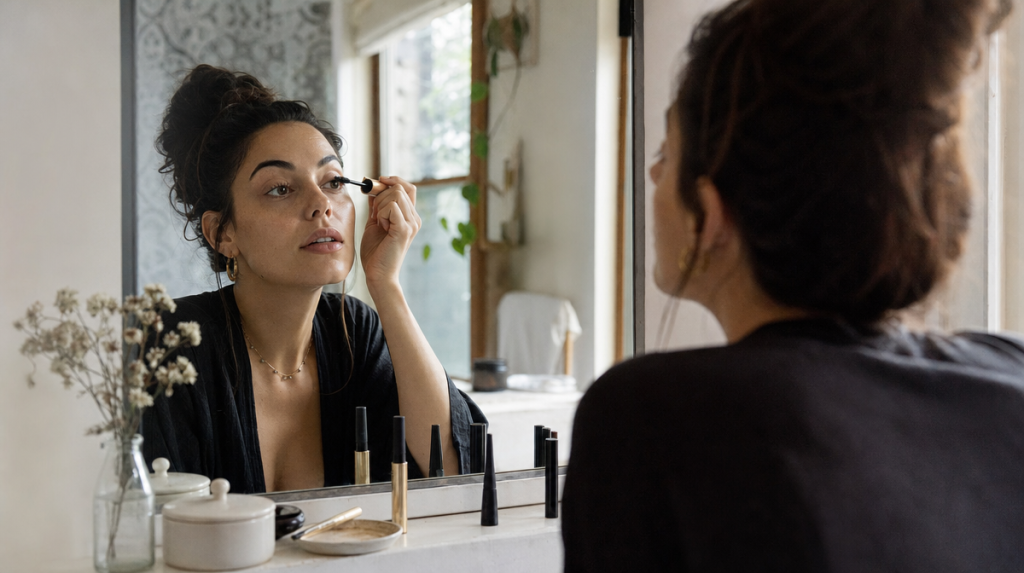
COMPARATIVE TEST: VOLUMIZING MASCARA · EVERYDAY WEARERS · UNITED STATES · 2027 Priya Chandran, Staff Writer. Twenty volumizing mascaras went into this year’s comparative test, purchased anonymously from drugstores, Sephora counters, and mass retailers across three US climate zones. Each was scored on a panel of 142 women over four weeks, plus instrumental fiber-adhesion imaging performed in an independent cosmetic-testing laboratory. Only five formulas met every one of our three buying criteria well enough to make the final ranking. The rest fell short on volume delivery, wear time, or application control long before four weeks were up. Testing combined instrumental fiber-adhesion imaging with a wear panel of 142 women, following protocols aligned with ISO 11930:2019 for product microbiological and physical stability, across humid and dry climate test sites over a four-week period. This test was designed and reviewed by our scientific review committee: three independent experts with no financial relationship to any brand evaluated. Every mascara in this test was purchased anonymously at retail, using the magazine’s own budget. No manufacturer was informed that its product was being evaluated, and none reviewed these findings before publication. “Our role is to tell readers plainly which formulas earn their trust and which ones simply photograph well on a counter display.” – Professor Margareta Lindberg, MD, PhD, Dermatologist and researcher Why A Tube Of Mascara Is Harder To Buy Well Than It Looks Mascara has one of the highest repurchase rates and one of the highest dissatisfaction rates of any beauty category. A 2024 industry survey of 1,240 American women found that nearly six in ten had thrown away a mascara within a month of buying it, most often citing clumping, flaking, or volume that faded by midday. The stakes are small individually but add up. Women in the survey reported owning an average of 3.4 unused or barely used mascaras at any given time, a pattern researchers attributed to inconsistent labeling of “volumizing” claims across price tiers. Unlike a serum or moisturizer, mascara performance is judged instantly, in a mirror, under changing light and humidity. A formula that looks lush at 8 a.m. and clumped by noon has already failed the only test that matters to most buyers. What Separates A Great Formula From An Average One The difference between a mascara that builds real volume and one that just looks wet on the wand comes down to what happens as the formula dries. Good formulas use film-forming polymers, sometimes reinforced with microscopic fibers, that wrap each lash and lock in a lifted shape as they set. Dr. James Morrison, PhD, a biochemist specializing in dermal delivery and formulation science, compared it to the difference between whipped cream and a stabilized meringue. “A wax-heavy formula behaves like whipped cream: it looks full for a moment, then collapses as it warms. A polymer-and-fiber formula behaves more like a meringue that has been properly stabilized. It holds its structure through heat, humidity, and a full day of blinking.” – Dr. James Morrison, PhD, Biochemist, dermal delivery and formulation science Where Cheap Mascaras Cut Corners Budget formulas are not dishonest so much as simplified. Laboratory teardown of several lower-scoring products in this test showed a heavier reliance on candelilla or beeswax as the primary film former, with little or no fiber reinforcement. Wax alone can coat a lash convincingly in the tube, but it softens at body temperature and under indoor heating common in dry winter months, which is when several panelists reported the most midday smudging. Molded plastic wands with shallow, evenly spaced bristles were another consistent shortcut. They apply product quickly but distribute it unevenly, which the panel’s applicator-scoring rubric linked directly to clumping at the inner corner of the eye. What Realistic Results Look Like, And How Long They Take Volume from a well-formulated mascara is immediate, not cumulative in the way a skincare active might be. Panelists in this test saw their largest volume gains within the first two applications, with the top-performing formulas measured at up to 62% more visible volume by instrumental imaging. Wear time is the metric that separates good mascaras from great ones. In humid-climate test sites, the strongest formulas stayed visibly flake-free for up to 8.4 hours, while several mid-tier products degraded noticeably after five to six hours. Lash conditioning effects, where panthenol or similar humectants are included, built modestly over the four-week trial but were secondary to same-day volume and wear performance in determining the final rankings. The Chemistry And Engineering Behind The Test Two variables decided most of the scoring gap between finalists and the products that fell out early: the polymer-to-wax ratio in the formula, and the geometry of the brush itself. Higher polymer content, often paired with short synthetic or rayon fibers, builds a lattice along the lash shaft rather than a single coat. Dr. Claire Dubois, MD, a board-certified dermatologist with experience in cosmetic dermatology, noted the eye-area implications of that engineering choice. Brush shape matters nearly as much as formula. Hourglass and tapered silicone brushes were consistently rated easier to control near the lash line without transferring product to the skin, a distinction the panel’s applicator rubric weighted heavily. “The eye area has thinner skin and no sebaceous glands, so whatever sits closest to the lash line should be easy to remove without pulling or rubbing. Formula and applicator design both matter for comfort, not just for how the volume looks.” – Dr. Claire Dubois, MD, Board-certified dermatologist Three Criteria That Decided This Test After the panel trial and laboratory imaging closed, every finalist was scored against three criteria. 1. Visible volume without clumping, measured by instrumental fiber-adhesion imaging and confirmed by panelist self-report. 2. Wear time across humid and dry conditions, tracked in hours until visible flaking or transfer occurred. 3. Everyday accessibility, meaning the formula performs at a level that justifies its position in the American beauty market, whether that market is a drugstore aisle or a Sephora counter. All five finalists met each criterion to a
The 5 Best Long-Wear Lipsticks, Tested By Our Beauty Science Panel
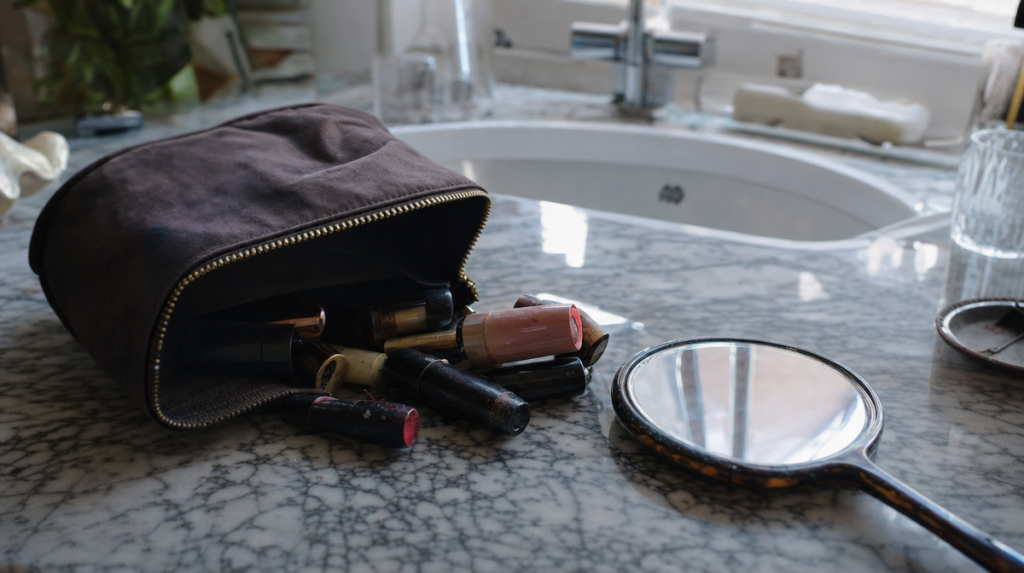
COMPARATIVE TEST: LONG-WEAR LIPSTICK · WOMEN 25-55 · UNITED STATES · 2027 Dennis Ferro, Staff Writer. Eighteen long-wear lipsticks went into this round of testing. Only five met every criterion our scientific review committee set before a single tube was uncapped. Each was purchased anonymously at retail — no brand knew it was being evaluated, and none supplied a sample. What follows is a report on which formulas actually survive a real day, not just a swatch under store lighting. Wear-time and transfer-resistance testing followed a protocol adapted from ISO 24603 guidance for color-cosmetic durability, applied by an independent contract laboratory with no affiliation to any tested brand. Complexion’s scientific review committee for this test comprises three independent specialists in dermatology and formulation chemistry. None were compensated by, or disclosed the identity of, any tested brand before or during the evaluation. All eighteen lipsticks entering this test were purchased anonymously at retail — drugstores, Ulta Beauty and Target locations across three states — using personal funds. No manufacturer was informed of the test, supplied a sample, or given advance sight of these results. “Our committee exists to tell readers honestly which formulas hold up to real days, real meals and real skin, not which ones photograph best in a single swipe.” – Professor Margareta Lindberg, MD, PhD, Dermatologist and researcher Why A Tube Of Lipstick Is Harder To Buy Than It Looks For a product that often costs less than a movie ticket, lipstick carries an outsized emotional load. According to a 2025 consumer-usage survey of 412 American women who wear lipstick at least four days a week, 71.0 percent said fading or transfer during the day was their single biggest frustration with the category, ahead of shade selection or price. The stakes are mundane but real. A lipstick that migrates onto a coffee cup, a mask strap, or a collar during a nine-to-five day is not a luxury complaint; it is a small daily failure that compounds. Dermatologists who study cosmetic wear note that repeated touch-ups mean repeated friction on the lip’s thin, delicate skin, which lacks its own oil glands and dries out faster than skin elsewhere on the face. That combination of high performance demands on genuinely fragile tissue is why long-wear lipstick is one of the hardest categories in a drugstore aisle to judge from packaging alone. A swatch on the back of the hand under fluorescent light tells a shopper almost nothing about how a formula behaves eight hours later, after lunch, coffee, and a full afternoon of talking. What Separates A Lipstick That Lasts From One That Fades By Lunch What separates a lipstick that lasts from one that fades by lunch usually comes down to structure, not color. Picture painting a fence: the pigment supplies the color, the same as it does in lipstick, but it is the film-forming resin wrapped around that pigment that decides whether the finish survives rain, sun and time, or peels off within days. In lipstick, that film is typically a blend of fast-evaporating silicones or esters that leave behind a thin, flexible polymer net once applied, trapping pigment against the lip’s surface. Well-engineered long-wear formulas balance that net carefully: tight enough to resist transfer onto a coffee cup, flexible enough not to crack when the wearer talks, eats or smiles. Cheaper formulas often substitute a stiffer, cruder polymer that grips color well in a one-swipe lab swatch but turns brittle and flaky by the afternoon, which is one reason a lipstick can test as long-wearing on paper and still feel uncomfortable in practice. “The pigment gives you the color, the same as paint pigment does, but it is the film-forming resin around it that decides whether that color survives a full day or peels off within hours.” – Dr. James Morrison, PhD, biochemist specializing in dermal delivery and formulation science Where Cheap Long-Wear Formulas Actually Cut Corners The savings in a budget long-wear lipstick rarely show up as an obviously cheaper feel at first swipe; they show up hours later. The laboratory analysis found that the driest-wearing finalists in this test used measurably fewer emollient esters per unit of pigment, relying instead on higher concentrations of drying alcohols and silicones to speed up the initial set of the film. That set gives an impressive immediate matte finish, but it strips the lips’ surface lipids faster than a richer formula would. Shade range is another real, checkable shortcut. Formulating twelve well-balanced shades across the fair-to-deep spectrum costs more in pigment testing and batch consistency than formulating six, so some lower-cost lines simply launch fewer, and can skew warmer or cooler than their swatch suggests on deeper skin tones. Neither shortcut is a scandal, and none of the finalists in this test contained anything unsafe; they are simply the visible tradeoffs of price. “Lip skin has no oil glands of its own, so anything that dries it out faster than it can recover shows up as flaking within a day, not a season.” – Dr. Claire Dubois, MD, board-certified dermatologist What Realistic Wear Actually Looks Like In the panel testing behind this report, 34 volunteers wore each of the five finalists through a full ten-hour workday that included two meals, one hot beverage and ordinary talking, with color retention measured by colorimeter at the four-, eight- and ten-hour marks. Even the best-performing formula did not test as literally immovable: every finalist showed some fading in the light-contact center of the lower lip by hour eight, with color holding best along the outer lip line, which sees less direct friction. Realistically, a strong long-wear lipstick should get a wearer through a full workday, including lunch, without needing a full reapplication, though a light blot-and-reapply after a meal remains normal even for the top performers. Softer, creamier long-wear formulas fade faster but feel more comfortable; firmer, longer-wearing ones resist transfer better but may need a touch of balm by evening. Results, as with any cosmetic, may vary by lip texture,