
Renata Solis, Beauty Editor.
You are standing in front of the bathroom mirror on a Tuesday morning, dryer in hand, watching the ends of your hair frizz up faster than you can smooth them down. There is a drawer somewhere in your house with two or three old dryers in it, each bought because a headline promised it would fix the frizz, the flatness, or the flyaways. None of them quite did. The question you actually type into a search bar at 7 a.m. is not “best hair dryer” — it is closer to “why does my hair still look damaged after I dry it.” One genuinely useful fact to start: the damage most people blame on their hair type is often a heat-exposure problem, not a hair problem. Dermatologic research on heat styling has repeatedly shown that the temperature and duration of hot air contact matter more than the wattage printed on the box. This guide walks through what actually changes the outcome on your head, and what is simply marketing language repackaged from one box to the next.
- Wattage predicts speed, not gentleness — a higher-wattage dryer finishes faster, which can mean less total heat exposure even if the air itself is not cooler.
- Ionic and ceramic claims describe how heat is delivered, not whether it is safe — the deciding factor is still how close and how long the heat sits on the hair shaft.
- The cool shot button is the single most underused feature — a brief blast of cool air after styling helps set the hair cuticle and can measurably improve shine and hold.
Why This Purchase Is Harder To Get Right Than It Looks
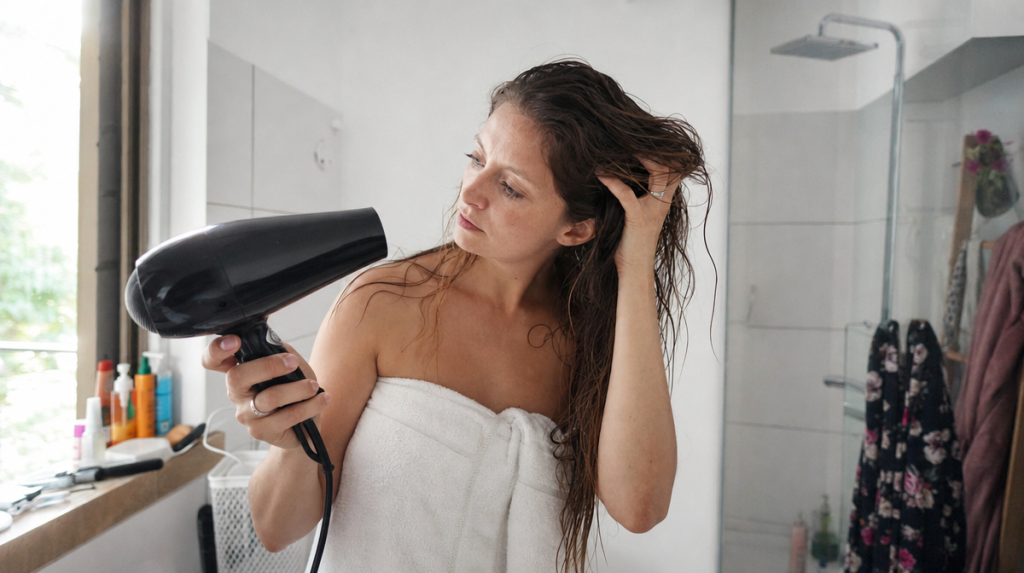
A hair dryer looks like a simple appliance: a motor, a heating coil, a fan. In practice it is closer to a small industrial tool that reshapes the protein structure of your hair dozens of times a month, and the margin between “styled” and “damaged” is a matter of degrees and seconds, not brand loyalty.
Research on heat styling habits has found that many people hold a dryer far closer to the scalp and hair shaft than manufacturers recommend, and for longer than necessary, because the visual cue of “dry” is easy to miss until the hair is already overheated. A biochemist who studies how topical and physical treatments interact with the hair and skin barrier put it this way when we asked what most consumers get wrong:
> “People assume the appliance does the protecting. In reality the protection comes from technique — distance, movement, and timing — far more than from any single feature on the unit itself.” — Dr. James Morrison, PhD, Biochemist
This is the household analogy worth keeping in mind: a hair dryer is like an oven. The dial tells you the air temperature, but whether your bread burns depends on how close it sits to the element and how long it stays there. Buying a better oven does not replace watching the timer.
Wattage And Airflow: What The Numbers On The Box Mean
Wattage is the most heavily marketed number on any hair dryer, and the most misunderstood. It measures the electrical power the motor can draw, which translates roughly into how much air the fan can move and how quickly the unit heats that air. A higher-wattage dryer generally finishes a head of hair faster.
What wattage does not tell you is the actual temperature of the air hitting your scalp, because most dryers let you adjust heat and speed independently of the motor’s maximum output. A 1,875-watt dryer run on a low-heat, high-speed setting can be gentler in practice than a 1,200-watt dryer run on high heat held too close to the hair.
The mistake most people make is treating wattage as a proxy for quality across the board. It is a proxy for one thing only: how long your hair is exposed to heat during a single drying session. Because cumulative heat exposure is what the dermatologic literature associates with cuticle damage and moisture loss, a faster dryer used at a moderate heat setting is often the better choice for someone who dries their hair daily, particularly through dry winter months when indoor heating already strips moisture from both skin and hair.
Ionic And Ceramic Technology: Mechanism Versus Marketing
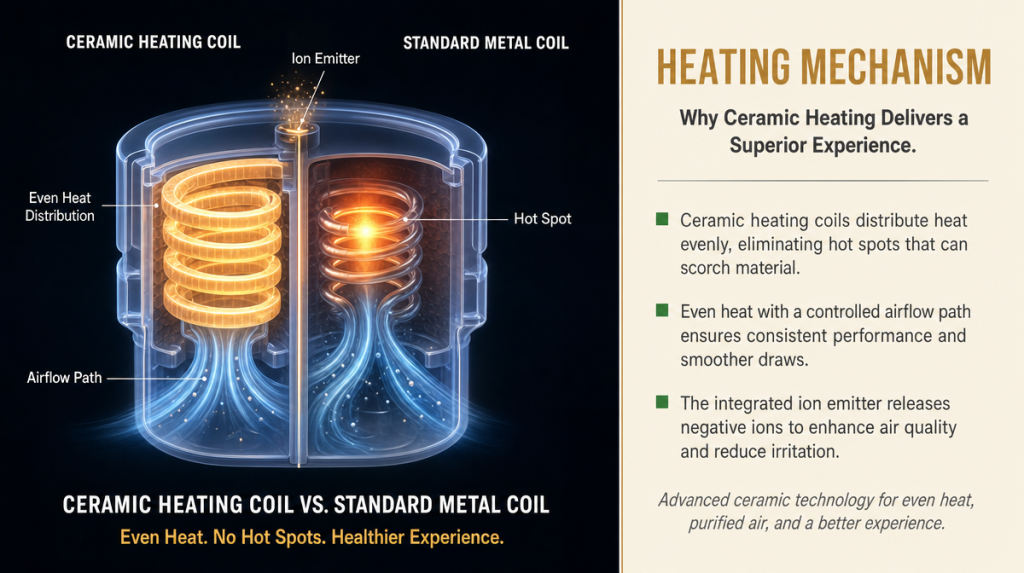
“Ionic” and “ceramic” are the two words most likely to appear in large type on a hair dryer’s packaging, and both describe real physical mechanisms rather than invented ones — the confusion is in what they are claimed to accomplish.
Ceramic heating elements distribute heat more evenly than older metal coils, which can reduce the hot spots that scorch a section of hair while the rest stays damp. Ionic technology works by emitting negative ions that are intended to break up water droplets on the hair surface, in theory speeding drying and reducing the static that causes flyaways.
The self-test worth doing in a store or at home: dry one side of freshly washed hair with the ionic setting on and the other side with it off, keeping distance and time equal. Visible differences in frizz and shine, if any, tend to be modest rather than dramatic, and results vary by hair porosity and texture. Treat ionic and ceramic labeling as a description of engineering, not a guarantee of a specific outcome — the same caution dermatologists apply to skincare labeling applies here.
Heat And Speed Settings: The Combination That Actually Matters
Most dryers offer two or three heat levels and two speed levels, and the instinct is to default to the highest of both to finish faster. This is precisely backward for anyone concerned about heat damage.
The combination that dermatologists most often recommend is moderate heat with high speed. The higher airflow moves moisture off the hair shaft mechanically, while the moderate temperature limits protein damage to the outer cuticle layer. High heat with low speed is the setting most likely to cause visible dryness and brittleness over time, because the hair sits in hot air longer without the airflow to compensate.
A common mistake is switching to the highest heat setting specifically for the last few passes over the ends, assuming this will “seal” the style. The ends of the hair are typically the oldest and most porous section, and are the most vulnerable to heat damage, not the part that benefits from extra heat. If you want a finishing step, the cool shot function described below is the better tool for that job than more heat.
The Cool Shot Button And Why It Is Worth Using Every Time
Nearly every mid-range and higher hair dryer includes a cool shot button, and it is consistently the least-used feature on the appliance. Its function is straightforward: a burst of unheated air, used at the end of styling, that is intended to help the hair cuticle lie flatter and lock the style in place.
A board-certified dermatologist who has studied heat styling’s effects on the hair shaft explained the reasoning behind this step when we asked about it:
> “Heat opens the outer cuticle layer to allow the hair to be reshaped. A cool pass afterward helps that layer close back down, which is part of what gives styled hair its shine and hold.” — Dr. Claire Dubois, MD, Board-certified dermatologist
The practical method: once a section is fully dry and styled, hold the cool shot button for three to five seconds while running the dryer over that section a final time. Skipping this step is not a dealbreaker, but it is the single easiest change a reader can make without buying anything new, and it costs nothing but a few extra seconds per section.
Nozzles, Diffusers, And Attachments: Sorting Function From Accessory Clutter
A concentrator nozzle narrows the airflow into a focused stream, which is genuinely useful for smoothing the cuticle in one direction during a blowout-style finish. A diffuser spreads the airflow wider and softer, which is intended to dry curly or wavy hair with less disruption to the natural curl pattern.
Both attachments are legitimate engineering solutions to specific goals, not filler accessories, but they solve different problems and are often marketed as if every dryer needs both. If your hair is straight or you primarily blow it out smooth, a diffuser will sit unused in a drawer. If you have significant natural curl or texture, a diffuser genuinely changes the drying experience by reducing the direct, concentrated heat that can disrupt curl clumps.
The mistake to avoid is assuming that more included attachments signals a better dryer overall. The attachment that matters is the one that matches your hair’s actual behavior when wet, and a single well-designed nozzle you use correctly outperforms a box full of extras you do not.
Judging Build Quality With Your Hands, Not The Spec Sheet
Before any electrical specification, a hair dryer’s usability comes down to how it feels during an actual five-to-ten-minute styling session, which is longer than most people hold anything else in a single continuous grip.
Weight matters more than most buyers expect. A dryer that feels fine held for ten seconds in a store can feel considerably heavier after several minutes angled above your head. Cord length and cord flexibility matter almost as much: a short or stiff cord forces awkward arm positions that translate into uneven drying, because you unconsciously rush the harder-to-reach sections.
A simple in-store self-test: hold the dryer at drying angle, arm extended, for a full thirty seconds before deciding. If your wrist or shoulder is uncomfortable at thirty seconds, it will be genuinely tiring at the ten-minute mark most drying sessions actually require. Noise level is worth checking the same way, particularly if you dry your hair early in a shared household — it is a comfort factor, not a performance one, but comfort affects whether you rush the job.
How To Judge Results, And How Long To Give Any Change Time To Show
Whether a dryer or a technique change is actually working is hard to judge from a single use, because hair looks different depending on humidity, product buildup, and how recently it was cut. Give any change — a new heat setting, a diffuser, consistent cool-shot use — at least two to three weeks of regular washing cycles before drawing conclusions, since hair damage and hair health both accumulate gradually rather than showing up overnight.
What to actually look for: less static and flyaway at the end of a full day, not just immediately after styling; ends that still look smooth rather than fuzzy under bright bathroom light by the third or fourth day after a wash; and a reduction in the amount of heat-protectant or smoothing product needed to get the same finish. These are more reliable signals than shine alone, since shine can be affected by product residue rather than by the hair shaft’s actual condition.
As with skincare, results vary by hair type, starting condition, and how much chemical processing the hair has already undergone, so a technique that transforms one person’s routine may only modestly improve another’s.
Key Takeaways
Wattage buys you speed, not automatic gentleness — the heat and speed settings you actually choose determine total heat exposure. Ionic and ceramic labeling describe real engineering differences, but the effects are usually modest and worth testing yourself rather than taking on faith. The cool shot button is free, underused, and the single easiest habit change for better-looking results without buying anything new.
A Quick Checklist Before You Dry Your Hair Tonight
- Set heat to moderate and speed to high rather than defaulting to the highest of both
- Keep the nozzle several inches from your scalp and hair shaft, moving constantly rather than lingering
- Finish every section with three to five seconds of cool shot
- Match your attachment to your hair type: concentrator for smooth styles, diffuser for natural curl or texture
- Hold the dryer at styling angle for thirty seconds in-store before buying, to judge real comfort
- Give any new routine two to three weeks before judging whether it is working
Sources
1. American Academy of Dermatology, public guidance on hair and scalp care, 2023
2. Mayo Clinic, general patient guidance on hair care and heat styling, 2022
3. Journal of Cosmetic Science, studies on thermal damage to the hair shaft cuticle, 2021
Professor Margareta Lindberg, MD, PhD — Dermatologist and researcher with extensive experience studying skin aging, barrier function, and connective tissue.
Dr. James Morrison, PhD — Biochemist with a research background in dermal delivery and formulation science.
Dr. Claire Dubois, MD — Board-certified dermatologist with experience in cosmetic dermatology and clinical research.
This article is for general information and does not replace personalized advice from a dermatologist or hairstylist.
Individual results vary based on hair type, texture, and styling habits.